



News
What Changing the Sole Shareholder in an LLC Entails: The Complete Step-by-Step Procedure
30 July 2026


20 April 2026
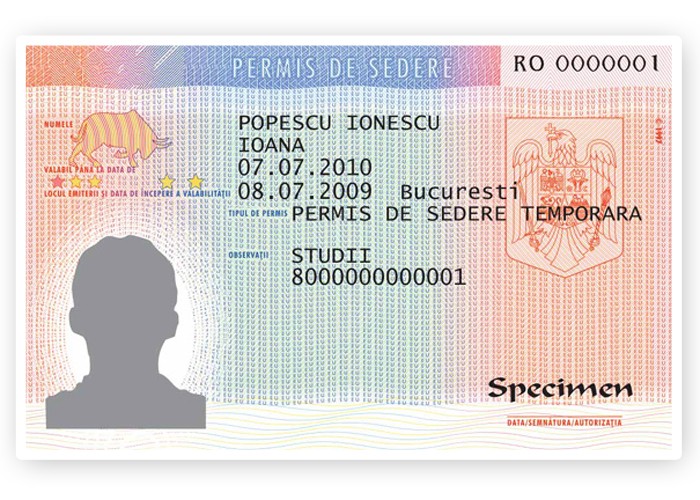
The duration of a residence permit in Romania varies depending on the type of stay and the purpose for which it was granted.
In most cases, a temporary residence permit is granted for periods of up to one year and is extended provided the original conditions are met. In contrast, a long-term residence permit offers stability and is valid for 5 or 10 years, depending on the circumstances.
For people living and working in Romania, the duration of their residence permit directly affects their right to work, access to services and the organisation of their work. Meeting deadlines and preparing documents correctly helps to avoid bottlenecks and delays.
In our experience, the best results are achieved when each stage is carefully managed, right from the very first application. For companies and entrepreneurs, matters become even more complex when residence status needs to be aligned with employment contracts, tax obligations and accounting records.
A temporary residence permit is granted for a limited period and is extended depending on the purpose of the stay. In most cases, the duration is up to one year, with the possibility of renewal.
An extension is granted when the person proves that the original circumstances remain unchanged. If the stay was granted for work, study or business activities, these conditions must be supported by up-to-date documentation.
There are also situations where the period granted is longer. Family members of Romanian citizens or of persons with a long-term right of residence may be granted extensions of up to 5 years. In other cases, the permit may be for a shorter period, for example for independent residence.
For long-term residence, the situation is more stable. The permit is issued for 5 years in most cases and for 10 years for family members of Romanian citizens.
To summarise briefly, the differences are easy to understand:
For this reason, the duration of a residence permit in Romania must always be assessed on a case-by-case basis, rather than according to a general model.
The renewal process begins with meeting the submission deadline. The application must be made at least 30 days before the current permit expires.
Having your application ready in good time is very helpful. If the documents are incomplete, the authorities may ask for further information, and the process may be delayed.
The basic requirements are straightforward:
Depending on the situation, other documents may also be required. For example, an employment contract, family documents, proof of income or health insurance.
For companies, this stage must also be coordinated with the administrative side of things. When a foreign employee works in Romania, their residence status affects their contracts, pay and tax obligations.
In such cases, working with Mușat & Partners helps to ensure the entire process is organised correctly. A tax adviser can assess the tax implications, whilst accounting services in Bucharest, Cluj or Timișoara ensure accurate record-keeping of the business’s activities.
In this way, extending your residence permit becomes part of a broader, well-managed process.
Long-term residence is granted following a period of continuous residence in Romania. Typically, five years of legal residence are required.
Continuity of residence is important. Short absences are accepted, but long periods spent outside the country may affect eligibility.
Not all types of residence are counted in the same way. For example, periods spent studying are treated differently from residence for work or business activities.
The procedure takes longer than extending a temporary residence permit. The assessment can take several months, and the outcome depends on the documents submitted and the applicant’s history.
Once approved, the permit is issued for a longer period, which brings stability and reduces the amount of paperwork.
For people who already hold a residence permit issued by another European Union member state, the period of stay in Romania is limited. For a longer stay, it is necessary to obtain a right of residence in Romania.
In our experience, the most common obstacles arise from a lack of a complete picture of the situation. A properly prepared application means up-to-date documents that are consistent with one another and tailored to the stated purpose.
For entrepreneurs and investors, the process becomes simpler when managed in conjunction with a financial consultancy firm that understands both the immigration aspects and the tax and accounting implications.
A valid residence permit provides stability and predictability. When each stage is handled correctly, the process becomes simpler and faster.
If you need support in obtaining or extending your residence permit, as well as in integrating this process into your company’s operations, the Mușat & Partners team can offer you tailored solutions and comprehensive support, from documentation through to the management of tax and accounting obligations.
Site map
Legal


